
Mopping can keep tile usable, but it rarely removes the soil, residue, odor, and discoloration that settle into grout lines. Green Clean Janitorial builds tile and grout cleaning into a practical facility maintenance program: routine cleaning when the floor is stable, periodic machine scrubbing when soil returns, and deeper restorative work when restrooms, entries, corridors, or break areas need a reset.
Tell us your floor type, traffic level, and problem areas. We respond same business day.
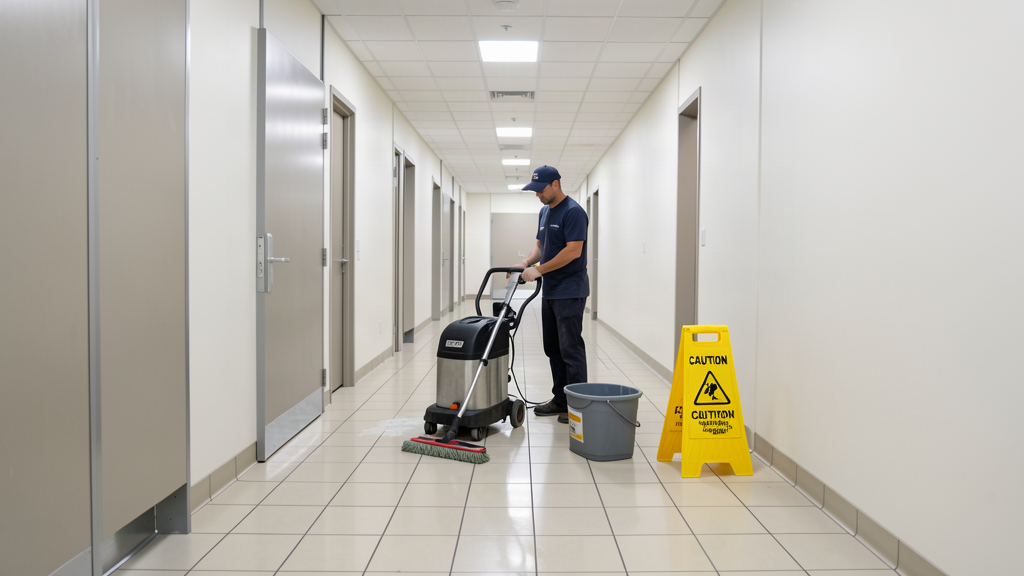
Image: commercial tile and grout maintenance using floor machine agitation, controlled chemistry, and safe work-zone setup.
Tile is often chosen because it is durable, washable, and acceptable in wet or high-traffic areas. The weak point is usually the grout. Grout lines are lower than the tile surface, which means dirty water, detergent residue, urine salts, soil, salt, grease, and moisture can settle where a mop passes over them. Over time the floor looks dark even when the tile itself is being cleaned every night.
That is why a tile and grout scope should separate daily appearance cleaning from periodic recovery cleaning. Daily service removes loose soil and keeps the facility usable. Periodic machine work agitates the grout lines, gives the cleaning solution time to work, rinses residues away, and resets the floor before discoloration becomes normal. Green Clean Janitorial helps facility managers define both layers so tile areas do not slowly decline between contract renewals.
Restrooms are the most common problem area because moisture, odor, splash zones, and high-touch surfaces overlap. Entryways and lobbies collect ice melt, grit, and tracked soil. Clinics and medical offices need cleanable flooring, but waiting rooms and restrooms can see heavy public use. Schools have restroom and cafeteria tile that gets compressed traffic during short windows. Gyms, dealerships, churches, warehouses, industrial plants, and event spaces all create different tile maintenance demands.
During a walkthrough, we look at fixture count, occupant and visitor traffic, floor type, grout condition, drainage, ventilation, cleaning history, and whether the problem is soil, odor, staining, damaged grout, or improper chemistry. That keeps the recommendation practical. Some buildings need a quarterly scrub. Some need a one-time restorative pass. Some need restroom detail work combined with daytime checks. Some need a different nightly process so the same issue does not return immediately.
A typical service starts with dry soil removal and a pre-inspection of edges, corners, drains, fixtures, and transition areas. We select chemistry based on the surface and the soil load, apply it with controlled dwell time, agitate the grout lines, machine scrub the floor where appropriate, rinse or extract residues, and leave the area safe for traffic based on the agreed schedule. In restrooms, we coordinate this with fixture cleaning, partitions, drains, odor sources, and supply areas so the floor does not improve while the rest of the room still feels neglected.
The goal is not to make one photo look better. The goal is to create a maintainable floor. After cleaning, we recommend a practical maintenance interval, daily chemistry, mop-water controls, floor-machine cadence, and supervision points. If damaged grout, failed sealer, loose tile, or permanent staining is present, we identify it instead of promising a cleaning result that chemistry cannot deliver.
Commercial tile and grout cleaning is a good fit for office buildings, medical offices, schools, universities, churches, dealerships, gyms, restaurants without food-prep scope, warehouses, locker rooms, common areas, and multi-tenant properties. It is especially useful when tenants complain about restroom odor, grout lines stay dark after mopping, floors feel sticky, entry tile looks dull, or the current janitorial scope never includes machine work.
Green Clean Janitorial can provide tile and grout cleaning as a standalone floor care project or as part of a broader commercial janitorial services program. For facilities with mixed floor types, we can also coordinate commercial carpet cleaning, VCT strip and wax service, and concrete floor cleaning under one schedule.
If grout is dark, do not immediately assume the nightly crew is skipping the area. Check whether dirty mop water is spreading soil, whether the cleaner is leaving residue, whether dwell time is too short, whether the floor needs machine agitation, and whether restrooms have ventilation or drainage issues. A two-week observation period can reveal whether the problem appears by mid-day, after close, after rain, or after a specific shift.
For most facilities, the best program is simple: daily or nightly maintenance, weekly attention to edges and corners, scheduled machine scrubbing before the floor looks bad, and periodic detail work in restrooms and entries. That keeps tile from becoming a visible complaint and helps facility managers avoid emergency reset work.
Request a walkthrough. We will identify the floor type, soil source, maintenance interval, and realistic scope before quoting.
Tell us about your facility. We respond same business day.