
Vacuuming removes daily debris. It does not remove the soil, salt, spills, coffee, adhesive residue, and traffic lanes that build up inside commercial carpet. Green Clean Janitorial builds carpet cleaning programs that protect appearance, indoor air quality, and replacement budgets without disrupting your building.
Tell us your facility type, square footage, and problem areas. We respond same business day.
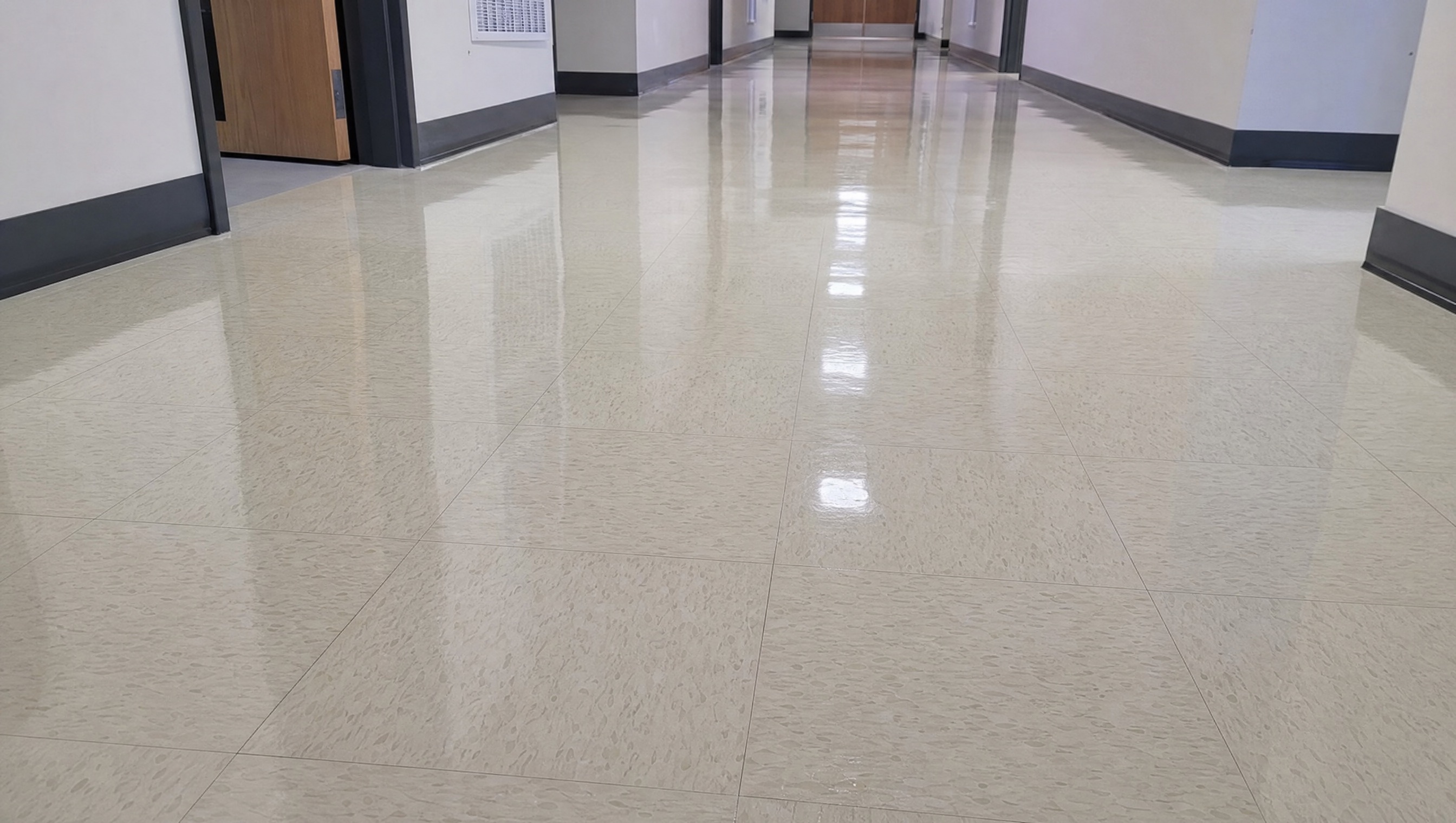
Commercial carpet maintenance works best when vacuuming, spot response, entry matting, and periodic extraction are planned together.
Commercial carpet fails slowly. At first, the entry looks a little darker than the rest of the room. Then conference room paths, elevator corridors, and desk aisles start showing permanent-looking lanes. Spills become easier to see and harder to remove. Odors hold after rainy days. Eventually the facility manager is comparing replacement quotes even though the carpet still has useful life left.
A good carpet maintenance program interrupts that cycle. It combines daily vacuuming, rapid spot response, entry matting, scheduled extraction, and periodic restorative cleaning. The goal is not just to make the carpet look better for one week after a cleaning. The goal is to remove abrasive soil before it cuts carpet fiber, reduce residue that attracts more soil, and keep visible areas consistent enough that tenants and visitors do not see decline.
Green Clean Janitorial can provide hot water extraction, low-moisture encapsulation where appropriate, pre-treatment, spot and stain treatment, traffic lane cleaning, odor treatment, edge detail, and post-cleaning recommendations. We scope the method by carpet type, soil level, drying window, building use, and traffic pattern. A clinic waiting room, a school administrative office, a Class-A office corridor, and an industrial facility’s office wing should not all receive the same plan.
Hot water extraction is the deeper restorative option for embedded soil and residue. Encapsulation can be useful for maintenance cycles where faster drying is important. Spot treatment handles coffee, food, toner, mud, adhesive, and recurring spill zones. Entry matting and vacuum frequency reduce the need for heavy extraction because they keep soil from spreading in the first place.
Office buildings with tenant tours need consistent presentation in lobbies, corridors, conference rooms, and elevator landings. Medical offices need clean waiting rooms and hallways that do not hold odors or visible soil around patient traffic. Schools and churches need seasonal deep cleaning after heavy public use. Dealerships, fitness centers, and mixed-use properties need faster spot response because the carpet is part of the customer experience. Industrial and warehouse offices need grit control where plant or dock traffic meets administrative space.
If your carpet only gets attention when it looks bad, you are already behind. The easier plan is to set a maintenance interval based on traffic. Low-traffic administrative offices may need annual extraction. Busy office corridors may need twice a year. Entry zones and public waiting rooms may need quarterly cleaning or spot service layered into a day porter program.
We start by walking the space and marking traffic lanes, stain types, entry points, transition areas, and furniture constraints. We ask about operating hours, tenant schedules, medical or school restrictions, and how quickly the building must reopen. Then we recommend the cleaning method and schedule. For after-hours work, we coordinate access, wet-floor signage, ventilation, drying expectations, and any rooms that should be cleaned in phases.
During service, technicians vacuum, pre-treat, agitate where needed, extract or encapsulate, detail edges, and document problem areas. After the carpet dries, we can recommend frequency changes, matting, spot kits, or additional janitorial steps. The best carpet cleaning program is connected to the nightly scope, not separated from it.
Facilities usually save money by cleaning carpet before it looks unsalvageable. Abrasive soil damages fibers every day it sits in the carpet. Sticky residue collects more soil after each spill. Entry lanes worsen when mats are too small or vacuuming is too light. A preventive schedule keeps those issues small. It also gives property managers documentation when tenants complain about carpet condition that is actually caused by spills, furniture use, or unusually heavy traffic.
Green Clean Janitorial can pair commercial carpet cleaning with commercial floor care, recurring janitorial service, restroom programs, and building-wide walkthroughs. You get one scope, one point of contact, and one plan for how the facility should look month after month.
Request a walkthrough and we will recommend extraction, encapsulation, spot treatment, and maintenance frequency for your building.
Tell us about your facility. We respond same business day.