
Restaurants need more than a quick closing wipe-down. Grease migrates from the line to tile grout, restrooms turn quickly during rush periods, entries collect weather soil, and dining-room floors have to look clean under bright customer-facing light. Green Clean Janitorial builds restaurant cleaning scopes around the spaces guests see, the back-of-house areas crews work in, and the periodic floor care that keeps food-service facilities from drifting into permanent grime.
Tell us about your dining room, kitchen surfaces, restroom traffic, floors, and service window.
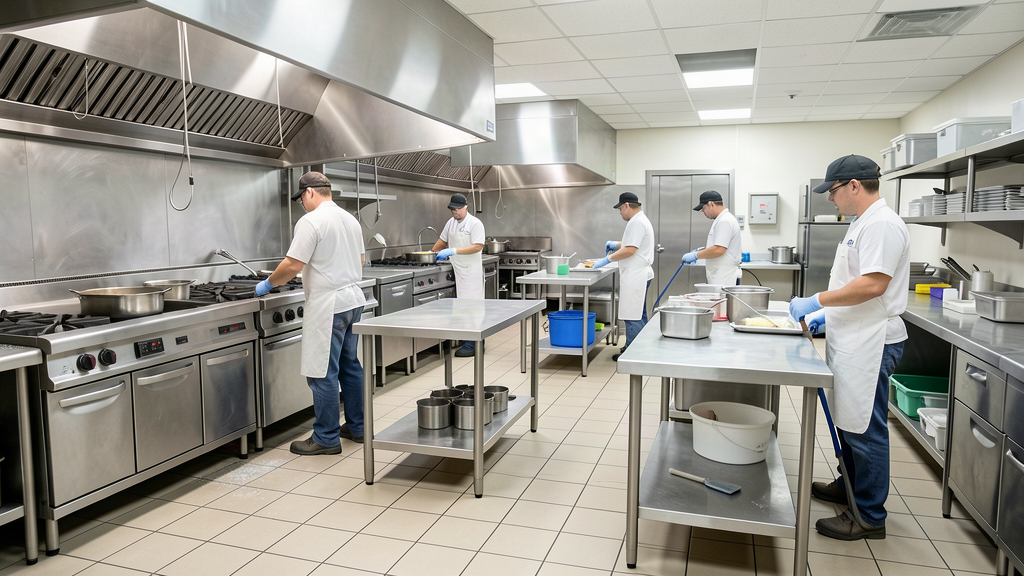
Restaurant cleaning should connect daily presentation, back-of-house hygiene, restroom readiness, and periodic floor detail work.
Restaurant cleaning sits between customer-facing janitorial service, food-service floor care, and back-of-house detail cleaning. A dining room may look clean at close while baseboards, chair legs, grout lines, door glass, restroom partitions, and entry mats are already building soil. A kitchen may pass the nightly wipe-down but still need scheduled degreasing, machine scrubbing, wall-edge detail, and floor recovery. When those tasks are not separated into daily, weekly, and periodic work, the facility usually pays for emergency deep cleaning later.
Green Clean Janitorial starts with a walkthrough of the restaurant as it actually operates: hours, rush periods, delivery paths, restrooms, dining-room flooring, back-of-house floor type, storage areas, staff break areas, grease-prone zones, and the safe window for after-hours service. From there, we build a written scope that separates standard recurring cleaning from project work such as tile and grout detail, carpet extraction, machine scrubbing, or floor refinishing.
A restaurant cleaning program may include entry glass, vestibules, host stands, dining-room floors, chair and booth detail, trash and recycling, restroom cleaning, touchpoint disinfection, breakroom cleaning, back-of-house floor scrubbing, tile and grout cleaning, mop-sink areas, staff corridors, storage-zone sweeping, baseboard detail, and periodic deep cleaning. The exact plan depends on the restaurant format. A fast-casual unit, full-service dining room, cafeteria, commercial kitchen, ghost kitchen, and franchise restaurant all create different traffic and soil patterns.
Some work should be clearly excluded or assigned to specialists. Hood-system cleaning, grease trap service, pest control, and fire-suppression system maintenance are not the same thing as janitorial cleaning. We help define what belongs in the cleaning agreement so the manager is not left with unclear vendor boundaries.
The first step is a practical walkthrough. We look at dining-room square footage, restroom fixture count, floor types, grease load, cleaning access, supply storage, water access, trash flow, parking, alarm procedures, and where the crew can stage equipment after close. We also ask what the restaurant team already handles internally. The best vendor scope supports the closing crew instead of duplicating tasks that employees already do well.
After the walkthrough, Green Clean separates the scope into routine and periodic work. Routine service may be nightly or several times per week. Periodic work may include deep restroom detail, grout recovery, auto-scrubbing, entry floor restoration, carpet extraction in waiting areas, or seasonal floor work before peak traffic. A written task list helps the manager know what was included in the quote and what should be scheduled as a separate project.
Restaurants usually lose presentation first at the floor, restroom, and entry. Grease and tracked-in soil make hard floors feel slick or sticky. Grout darkens around the kitchen transition, beverage stations, host stands, and restroom entries. Door glass gets fingerprints during every rush. Restrooms create customer complaints faster than almost any other area because they are small, high-use, and easy to judge.
For hard surfaces, Green Clean can connect restaurant janitorial service with commercial tile and grout cleaning, commercial concrete floor cleaning, and recurring floor care. For guest-facing restrooms, the cleaning scope should define fixtures, partitions, dispensers, mirrors, odor sources, floor edges, supply reporting, and the frequency needed to keep the restroom from falling behind between shifts.
Before requesting a quote, list the areas that cause the most rework: greasy kitchen floors, dark grout, restroom odor, sticky dining-room floors, entry salt, food debris under booths, trash flow, or complaints after weekend rushes. Share the preferred cleaning window, security instructions, approximate square footage, restroom count, floor types, and whether the space is cleaned daily by employees. Those details help us recommend the right frequency instead of quoting a generic restaurant package.
Restaurant operators with multiple locations should standardize the cleaning checklist while allowing local differences. A city location may need more entry recovery. A suburban unit may need more dining-room floor care. A drive-through heavy unit may need different restroom and exterior-entry attention. The checklist should make those differences visible. Our janitorial proposal checklist gives facility and operations teams a simple way to compare restaurant cleaning quotes without losing the details that affect daily operations.
Request a walkthrough and we will scope dining rooms, restrooms, kitchen-adjacent areas, tile, grout, floors, access rules, and service frequency.
Tell us about your facility. We respond same business day.