
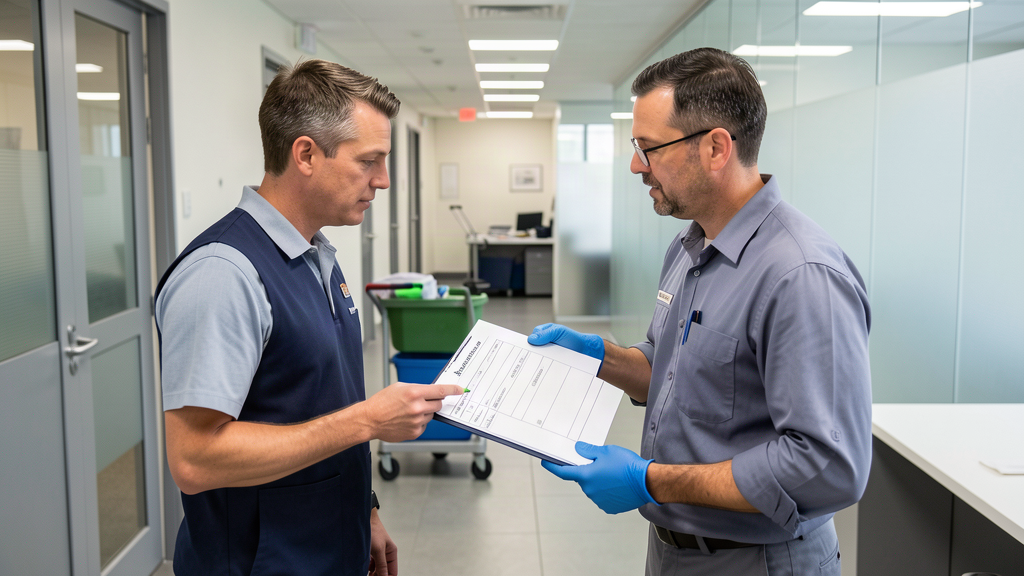
Caption: A written commercial cleaning scope of work helps facility managers compare quotes, confirm cleaning frequency, and keep service expectations clear.
A commercial cleaning scope of work turns “we need cleaning” into a usable plan. It explains which areas are included, which tasks happen, how often they happen, who supplies consumables, when crews can enter, how quality is checked, and how changes are approved. Without that detail, two cleaning proposals can look similar while covering very different work.
For a facility manager, office manager, property manager, or operations lead, the scope is the best way to prevent disappointment. If restrooms are only cleaned twice per week, carpet extraction is not included, entry glass is excluded, or secure rooms require an escort, those details should be visible before service starts.
Start with facility areas and exclusions
List the spaces that need service: lobbies, reception desks, offices, cubicles, conference rooms, corridors, restrooms, breakrooms, kitchens, copy rooms, training rooms, locker rooms, warehouses, clinics, classrooms, bank lobbies, and technical support areas. The more specific the area list, the easier it is to quote accurately.
Also list excluded areas. A bank may exclude vault-adjacent rooms or equipment. A technical facility may exclude server cabinets and restricted data areas. A medical office may separate clinical spaces from administrative spaces. Exclusions make the scope safer because nobody has to guess.
If your building has special environments, review data center cleaning services or bank cleaning services for examples of how access, surface approval, and customer-facing presentation can change the plan.
Define daily, weekly, and periodic tasks
Separate recurring tasks from project work. Daily or nightly tasks may include trash removal, recycling, restroom cleaning, touchpoint wiping, vacuuming, breakroom cleaning, sink and counter cleaning, floor spot mopping, and lobby reset. Weekly tasks may include deeper dusting, low glass, detail vacuuming, interior partition cleaning, doors, and baseboards.
Periodic tasks may include carpet extraction, floor scrubbing, VCT stripping and waxing, tile and grout cleaning, high dusting, and post-construction cleanup. This distinction matters because many disputes come from hidden assumptions. A manager may assume floor waxing is included in janitorial service while a vendor assumes it is a separate project.
Set frequency by use, not habit
Cleaning frequency should match building use. A small administrative office may need service several times per week. A busy medical office, school office, bank branch, dealership, or high-traffic corporate building may need nightly service. Restrooms, breakrooms, lobbies, and entrances often need more attention than private offices because their condition changes faster.
Ask practical questions: How many employees use the building? How many visitors arrive each day? Do customers use the restroom? Are there traffic spikes? Are there multiple shifts? Does weather bring salt, mud, or water into the entry? Do carpet lanes appear quickly? Those answers help Green Clean Janitorial recommend a schedule that fits the building.
Include supplies, access, and security rules
The scope should say who provides trash liners, paper towels, toilet tissue, soap, sanitizer, odor-control products, floor mats, and specialty chemicals. It should also say who reports low inventory and dispenser problems. Restroom complaints are often partly a supply-process issue, not just a cleaning issue.
Access instructions also belong in the scope. Include service windows, entry points, alarm procedures, badge requirements, key handling, escort rules, parking, elevator use, loading areas, and rooms that stay locked. For banks, data centers, medical offices, schools, and multi-tenant properties, these instructions are part of the cleaning plan.
Add quality checks and communication rules
Define how quality will be measured: supervisor inspections, restroom check points, floor-care observations, supply reporting, and a regular review with the facility contact. Communication rules are just as important. Define the point of contact, urgent issue procedure, and how new requests are approved.
A walkthrough makes the written plan realistic. Green Clean Janitorial looks at traffic patterns, floor types, restroom counts, employee and visitor use, supply storage, access windows, and recurring problem areas. The walkthrough may reveal that a building needs commercial restroom cleaning with daytime checks, recurring floor care, day porter service, or scheduled commercial carpet cleaning instead of emergency spot work.
What to send when requesting a quote
When asking for a commercial cleaning quote, provide the facility address or service market, building type, approximate square footage, number of restrooms, floor types, employee count, visitor traffic, desired service days, preferred cleaning window, current pain points, supply responsibilities, and access restrictions.
That information helps Green Clean Janitorial build a quote that fits the building instead of making assumptions. It also helps you compare proposals fairly. The lowest price is not useful if it excludes restrooms, floor care, supplies, or the cleaning frequency your building actually needs.
Commercial cleaning scope checklist
Use this checklist before approving a proposal:
- Areas included and excluded
- Daily, weekly, monthly, and periodic tasks
- Restroom fixture count and supply responsibilities
- Hard-floor and carpet-care expectations
- Glass, entry, lobby, and customer-facing standards
- Cleaning frequency and service windows
- Access, alarm, badge, escort, and parking instructions
- Approved products or restrictions
- Reporting process for damage, low supplies, or maintenance issues
- Supervisor inspections and review cadence
- Change-order process for added work
- Point of contact and urgent issue procedure
FAQs
What should be included in a commercial cleaning scope of work?
It should include the areas served, cleaning tasks, frequency, supplies, access rules, excluded spaces, quality checks, communication process, and how extra work is approved.
Is floor care usually included in janitorial service?
Routine vacuuming and mopping are often included. Carpet extraction, VCT stripping and waxing, machine scrubbing, and restorative floor care are usually scheduled as separate periodic services.
How detailed should a cleaning checklist be?
It should be detailed enough that the facility manager and cleaning crew understand the same expectations. If a task affects complaints, safety, access, restrooms, supplies, or floors, it should be written down.
How do I get a quote from Green Clean Janitorial?
Use the request a quote form or call 877-737-3030. Share your facility type, square footage, restrooms, cleaning frequency, floor types, and current problems so the team can prepare for the walkthrough.